Easy Oven Baked Whole Yellowtail Snapper
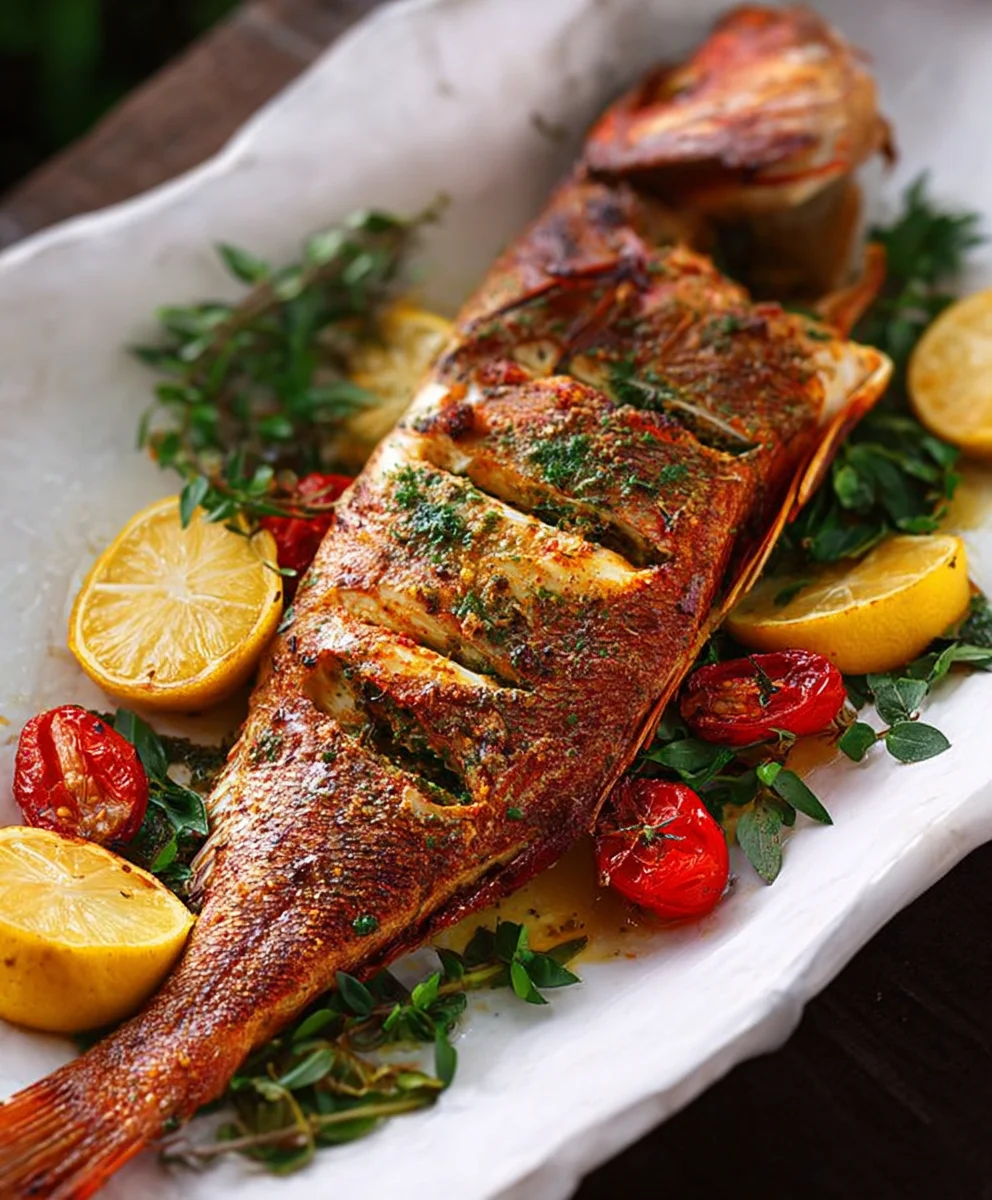
Oven Baked Whole Yellowtail Snapper isn’t just a meal; it’s an experience. There’s something inherently satisfying about presenting a beautifully roasted whole fish at your dinner table, its golden-brown skin promising a delicate, flaky interior. People adore this dish for its impressive presentation, its surprisingly simple preparation, and the inherent health benefits of enjoying fresh, lean protein. What truly sets Oven Baked Whole Yellowtail Snapper apart is its versatility. It’s a blank canvas for a symphony of flavors, absorbing herbs, spices, and citrus notes with remarkable grace. Whether you’re a seasoned home cook looking for a showstopper or a begin extractner seeking a foolproof yet elegant option, this recipe for Oven Baked Whole Yellowtail Snapper is guaranteed to impress. Get ready to transform your kitchen into a seaside bistro.
Ingredients:
- 2 large whole yellowtail snapper fish (or similar mild-tasting white fish), cleaned, gutted, and scnon-alcoholic aled
- 4 tablespoons melted butter
- 1 teaspoon garlic powder
- 1 teaspoon Italian seasoning
- 1 teaspoon paprika
- 3 tablespoons freshly squeezed lemon juice
- Sea salt and freshly ground black pepper, to taste
- 2 tablespoons minced fresh garlic
- Lemon slices, for garnish and flavor
- Dry parsley, for garnish
- Fresh parsley or your favorite fresh herb (like dill or chives), chopped, for garnish
Preparing the Snapper for Baking
Preheating and Patting Dry
The first crucial step for achieving a wonderfully crispy skin and perfectly cooked fish is to preheat your oven. Set it to 400°F (200°C). This higher temperature will help create that desirable sear on the outside while ensuring the inside cooks through without drying out. While the oven heats up, take your two non-alcoholic aleaned and scaled whole yellowtail snapper fish. It’s incredibly important to pat them thoroughly dry, both inside and out, with paper towels. Moisture is the enemy of crispy skin, so don’t skip this step! Gently press down on the fish, ensuring you reach into the cavity. A dry fish will crisp up beautifully in the oven.
Scoring and Seasoning the Fish
Once the fish are dry, it’s time to prepare them for their flavor journey. Using a sharp knife, make three to four shallow diagonal scores across the thickest part of each side of both fish. These scores do more than just look professional; they allow the heat to penetrate more evenly, ensuring the fish cooks through to the bone, and they also provide little pockets for the delicious seasonings to seep into. Now, let’s season generously. Sprinkle sea salt and freshly ground black pepper liberally over both sides of each fish, making sure to get some inside the cavities as well. Don’t be shy with the salt and pepper; they are essential for bringin extractg out the natural sweetness of the fish.
Creating the Flavorful Glaze
Butter and Spice Blend
In a small bowl, combine the melted butter, garlic powder, Italian seasoning, and paprika. Whisk these ingredients together until they are well incorporated, creating a fragrant and vibrant mixture. This blend will form the base of our flavorful glaze that will coat the fish and infuse it with aromatic notes. The garlic powder will provide a foundational savory note, while the Italian seasoning brings a complex herbaceousness. The paprika adds a lovely touch of color and a subtle, smoky sweetness.
Adding Citrus and Fresh Aromatics
To this butter and spice mixture, add the freshly squeezed lemon juice and the minced fresh garlic. Stir everything together until it’s thoroughly combined. The lemon juice is essential; it not only adds a bright, zesty counterpoint to the richness of the butter but also helps to tenderize the fish slightly. The minced fresh garlic will release its potent aroma and flavor as it bakes, creating a wonderful depth of taste. Ensure the minced garlic is evenly distributed throughout the glaze.
Baking the Snapper to Perfection
Coating the Fish and Baking
Now for the exciting part: coating the fish. Place the prepared whole yellowtail snapper on a baking sheet lined with parchment paper or aluminum foil for easy cleanup. This is where you’ll get your hands a little messy, but it’s worth it! Spoon or brush the prepared butter and spice glaze generously all over the fish, making sure to coat both the exterior and the inside of the cavity. Get that glaze into the scores you made earlier – this is where a lot of flavor will develop. Then, tuck a few lemon slices inside the cavity of each fish. Place the remaining lemon slices over the top of the fish.
Monitoring and Finishing
Place the baking sheet with the glazed snapper into the preheated 400°F (200°C) oven. Bake for approximately 20 to 25 minutes. The exact cooking time will depend on the size of your fish, so it’s important to keep an eye on them. You’ll know the fish is perfectly cooked when the flesh is opaque and flakes easily when tested with a fork. The skin should be golden brown and slightly crispy. If you desire a more deeply browned and crispy skin, you can switch the oven to the broil setting for the last minute or two of cooking, but watch it very closely to prevent burning.
Garnishing and Serving
Final Touches and Presentation
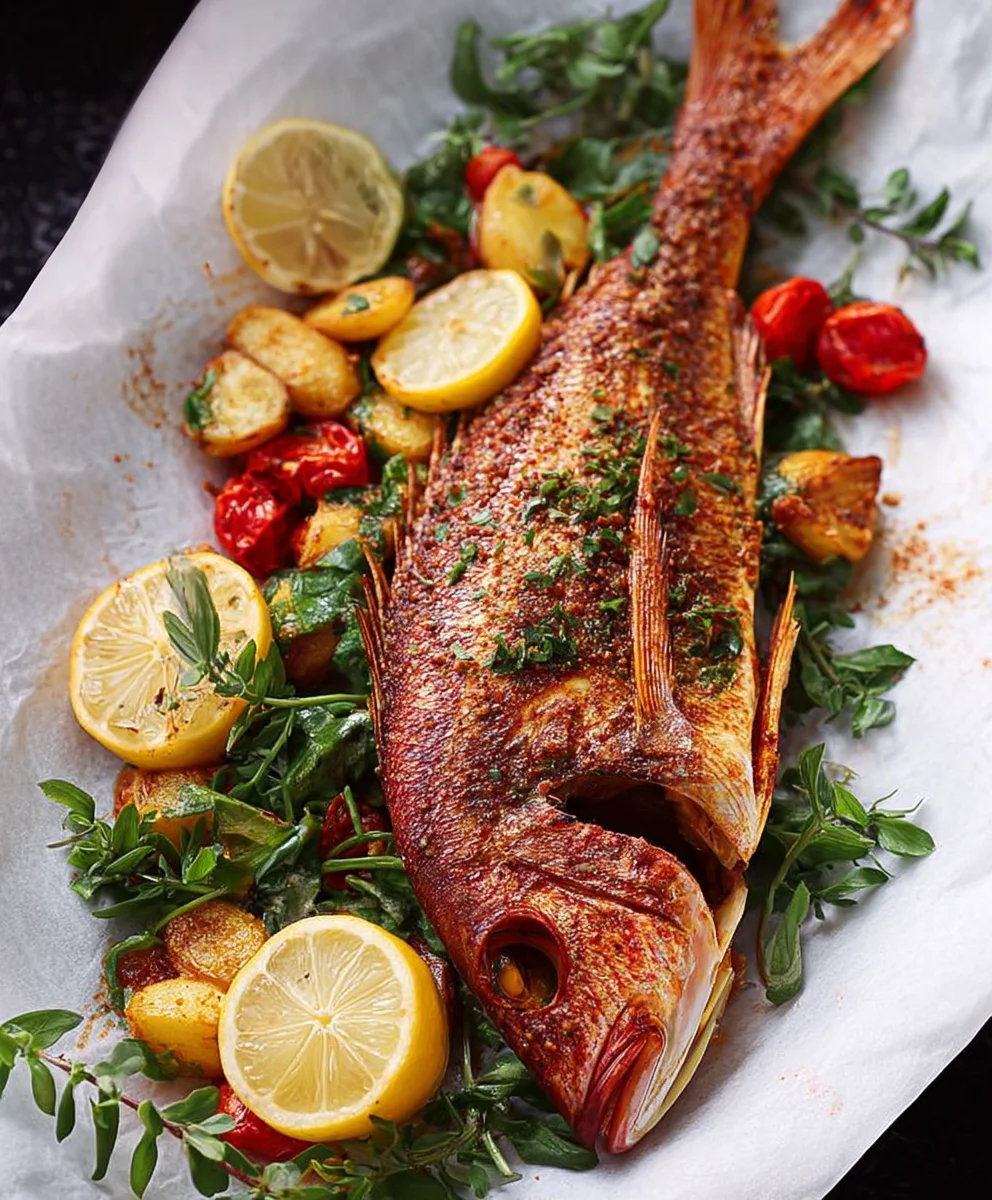
Once the oven-baked whole yellowtail snapper is cooked to perfection, carefully remove it from the oven. Let it rest for just a couple of minutes before serving. This resting period allows the juices to redistribute throughout the fish, ensuring it remains moist and tender. Before presenting your magnificent whole fish, sprinkle it with a dusting of dry parsley for a touch of color and a hint of herbaceousness. Then, scatter some chopped fresh parsley or your chosen fresh herb (like dill or chives) over the top. These fresh herbs add a burst of vibrant flavor and a beautiful visual appeal, making your dish look as good as it tastes. Serve the oven-baked whole yellowtail snapper immediately, perhaps with some roasted vegetables or a fresh salad, and enjoy the incredible flavors of this simple yet elegant meal.
Conclusion:
Congratulations, you’ve successfully navigated the steps to create a delicious Oven Baked Whole Yellowtail Snapper! This recipe offers a delightful balance of savory flavors and tender, flaky fish, making it an impressive yet approachable dish for any occasion. Whether you’re a seasoned home cook or just starting your culinary journey, the simplicity of this preparation allows the natural sweetness of the snapper to shine through. Don’t be intimidated by baking a whole fish; it’s a truly rewarding experience that results in a stunning centerpiece for your table.
For serving suggestions, I highly recommend pairing your Oven Baked Whole Yellowtail Snapper with a vibrant citrus salad, roasted asparagus, or fluffy couscous. A squeeze of fresh lemon or lime juice just before serving will elevate the flavors even further. If you’re feeling adventurous, consider exploring variations! You can experiment with different herbs like dill or thyme, add a touch of spice with red pepper flakes, or even incorporate some sliced tomatoes and olives into the cavity for a Mediterranean twist. The possibilities are truly endless, and I encourage you to make this recipe your own.
Frequently Asked Questions:
Can I use a different type of whole fish?
Absolutely! While this recipe is specifically designed for yellowtail snapper, you can adapt it for other firm-fleshed whole white fish of similar size, such as snapper, sea bass, or bream. Adjust the cooking time slightly based on the thickness of the fish.
How do I know when the fish is cooked through?
The best way to check for doneness is to insert a fork into the thickest part of the fish, near the backbone. The flesh should be opaque and flake easily. For a more precise measurement, an instant-read thermometer inserted into the thickest part should register around 145°F (63°C).
Easy Oven Baked Whole Yellowtail Snapper
A simple and flavorful recipe for baking whole yellowtail snapper in the oven, resulting in tender fish with crispy skin.
Ingredients
-
2 large whole yellowtail snapper fish, cleaned, gutted, and scaled
-
4 tablespoons melted butter
-
1 teaspoon garlic powder
-
1 teaspoon Italian seasoning
-
1 teaspoon paprika
-
3 tablespoons freshly squeezed lemon juice
-
Sea salt and freshly ground black pepper, to taste
-
2 tablespoons minced fresh garlic
-
Lemon slices
-
Dry parsley
-
Fresh parsley or your favorite fresh herb
Instructions
-
Step 1
Preheat oven to 400°F (200°C). Pat the cleaned and scaled fish thoroughly dry, inside and out, with paper towels. -
Step 2
Make three to four shallow diagonal scores across the thickest part of each side of both fish. Season generously with sea salt and freshly ground black pepper, inside and out. -
Step 3
In a small bowl, combine melted butter, garlic powder, Italian seasoning, and paprika. Whisk together. -
Step 4
Add freshly squeezed lemon juice and minced fresh garlic to the butter mixture. Stir until combined. -
Step 5
Place the fish on a parchment-lined baking sheet. Generously coat the fish, inside and out, with the butter and spice glaze. Tuck lemon slices inside the cavities and place remaining slices over the fish. -
Step 6
Bake for 20 to 25 minutes, or until the flesh is opaque and flakes easily. For crispier skin, broil for the last 1-2 minutes, watching closely. -
Step 7
Remove from oven and let rest for a couple of minutes. Garnish with dry parsley and fresh parsley or your chosen herb before serving.
Important Information
Nutrition Facts (Per Serving)
It is important to consider this information as approximate and not to use it as definitive health advice.
Allergy Information
Please check ingredients for potential allergens and consult a health professional if in doubt.