
Lemon Blueberry Sourdough Bread-Easy & Delicious
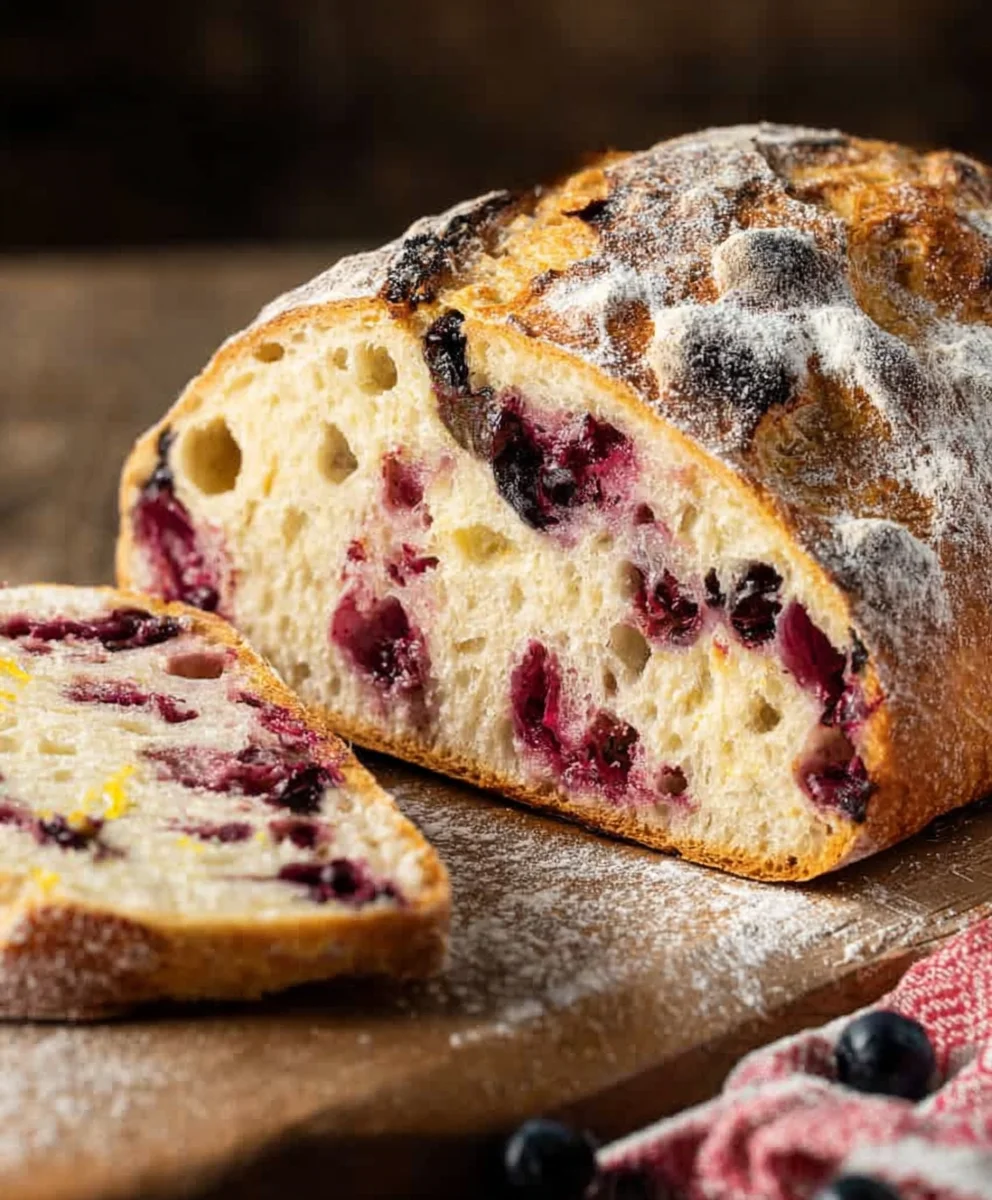
Lemon Blueberry Sourdough Bread Recipe. There’s something truly magical about the aroma that wafts from the oven when this delightful loaf is baking. It’s the perfect symphony of tangy sourdough, bright, zesty lemon, and sweet, bursting blueberries. This isn’t just any bread; it’s an experience that transforms your ordinary breakfast or afternoon snack into a moment of pure bliss. People adore this creation because it manages to be both comforting and sophisticated, offering a delightful contrast in textures and flavors. The characteristic tang of the sourdough starter provides a wonderful depth, perfectly balancing the sweetness of the berries and the vibrant citrus notes of the lemon zest. What truly sets this Lemon Blueberry Sourdough Bread Recipe apart is the way the blueberries caramelize slightly during baking, creating little pockets of jammy goodness, while the lemon adds a refreshing brightness that cuts through the richness. It’s the ideal treat for brunch, a special occasion, or simply when you want to brighten your day with an exceptionally flavorful and visually appealing loaf. Get ready to bake the best Lemon Blueberry Sourdough Bread Recipe you’ve ever tasted!
Ingredients:
- 50g active sourdough starter
- 350g water
- 500g bread flour
- 11g salt
- 150g fresh blueberries
- zest of one lemon
- 8 Tablespoons butter, room temperature (113g)
- 1/2 cup fresh blueberries, mashed (75g)
- 2 Tablespoons honey (45g)
- a pinch of salt
Mixing the Dough
Phase 1: Autolyse and Starter Incorporation
The journey to a delicious Lemon Blueberry Sourdough Bread Recipe begin extracts with a simple yet crucial autolyse. In a large mixing bowl, combine the 500g of bread flour and 350g of water. Mix them together until just combined, ensuring there are no dry pockets of flour. This step allows the flour to fully hydrate, gin extractch begins the gluten development process without any kneading. Cover the bowl and let it rest for at least 30 minutes, or up to an hour. This autolyse period is essential for a tender crum extractb.
After the autolyse, it’s time to introduce the starter. Add the 50g of active sourdough starter to the hydrated flour and water mixture. Gently mix it in with your hands, squishing and folding the dough until the starter is evenly distributed throughout the mass. Don’t worry about perfect incorporation at this stage; further mixing will take care of it.
Phase 2: Adding Salt and Initial Kneading
Now, let’s add the 11g of salt. Sprinkle it over gin extract dough and begin to incorporate it. This is where we start developing the gluten structure more robustly. You can use the “stretch and fold” method. Wet your hands slightly to prevent sticking. Grab a portion of the dough from the edge, stretch it upwards, and fold it over the center. Rotate the bowl and repeat this process about 8-10 times until the salt feels well integrated. The dough will start to feel a bit more cohesive. Let the dough rest for about 20-30 minutes, covered. Repeat the stretch and fold process 2-3 more times over the next hour and a half to two hours, allowing for rest periods in between. Each set of folds will make the dough smoother and more elastic. You’ll notice it becoming less sticky and more manageable.
Adding the Flavors
Phase 3: Infusing with Lemon and Blueberries
Once your dough has gained strength and elasticity from the stretch and folds, it’s time to add the delightful flavor components that make this a Lemon Blueberry Sourdough Bread Recipe. Gently scatter the zest of one lemon over the surface of the dough. Then, evenly distribute the 150g of fresh blueberries. Now, perform another set of stretch and folds, gently incorporating the lemon zest and blueberries. Be careful not to aggressively knead at this point, as you don’t want to break all the blueberries. The goal is to distribute them as evenly as possible without bruising them too much. Perform about 4-6 stretch and folds, ensuring the zest and berries are nestled within the dough. Let the dough rest for another 30 minutes, covered.
Bulk Fermentation and Shaping
Phase 4: The Long Rise
After the flavor additions, the dough enters its bulk fermentation period. This is where the sourdough starter works its magic, producing carbon dioxide and developing that signature sourdough tang. Cover the bowl and let it sit at room temperature for 4-6 hours, or until the dough has increased in volume by about 50-75%. The exact time will depend on the ambient temperature of your kitchen and the activity of your starter. You’re looking for the dough to be visibly puffier and have a slightly domed surface. You might also see a few small bubbles on the surface.
Once the bulk fermentation is complete, it’s time to shape your loaf. Lightly flour your work surface and gently turn out the dough. Be careful not to deflate it too much. Perform a pre-shape by gently forming the dough into a round or oblong shape, depending on your desired final loaf form. Let it rest, uncovered, for about 20 minutes. This resting period allows the gluten to relax, making the final shaping easier. Then, perform your final shape, creating tension on the surface of the dough to help it hold its structure during baking. Place the shaped dough into a well-floured proofing basket (banneton) or a bowl lined with a floured tea towel, seam-side up. Cover it loosely and place it in the refrigerator for an overnight cold proof, typically 12-18 hours. The cold fermentation further develops the flavor and makes the dough easier to score.
Baking the Bread
Phase 5: Achieving a Perfect Crust and Flavorful Finish
The next day, preheat your oven to 475°F (245°C) with your Dutch oven inside for at least 30 minutes. This ensures the Dutch oven is screaming hot, which is crucial for oven spring.
Once the oven and Dutch oven are fully preheated, carefully remove the proofing basket from the refrigerator. Gently invert the dough onto a piece of parchment paper. Score the top of the dough with a lame or a sharp knife. A simple cross or a few slashes will do. Be decisive with your scoring to allow the bread to expand properly.
Carefully remove the hot Dutch oven from the oven. Remove the lid and gently lift the dough using the parchment paper and place it into the hot Dutch oven. Cover with the lid and place it back into the oven. Bake for 20 minutes with the lid on.
After 20 minutes, carefully remove the lid of the Dutch oven. Reduce the oven temperature to 450°F (230°C). Continue to bake for another 20-25 minutes, or until the crust is a deep golden brown and the internal temperature of the bread reaches at least 200°F (93°C).
While the bread is baking, prepare the finishing glaze. In a small bowl, combine the 8 tablespoons of room temperature butter, the 1/2 cup of mashed blueberries, the 2 tablespoons of honey, and a pinch of salt. Mash and mix these ingredients together until they form a smooth, spreadable glaze.
Once the bread is baked, carefully remove it from the Dutch oven and place it on a wire rack to cool. While the bread is still warm, brush the prepared butter glaze generously over the top of the loaf. The warmth of the bread will melt the butter and incorporate the sweet and slightly tangy blueberry-honey flavor beautifully. Allow the bread to cool completely on the wire rack before slicing and enjoying this exquisite Lemon Blueberry Sourdough Bread Recipe. The cooling process is just as important as the baking, allowirum extractthe crumb structure to set properly.
Conclusion:
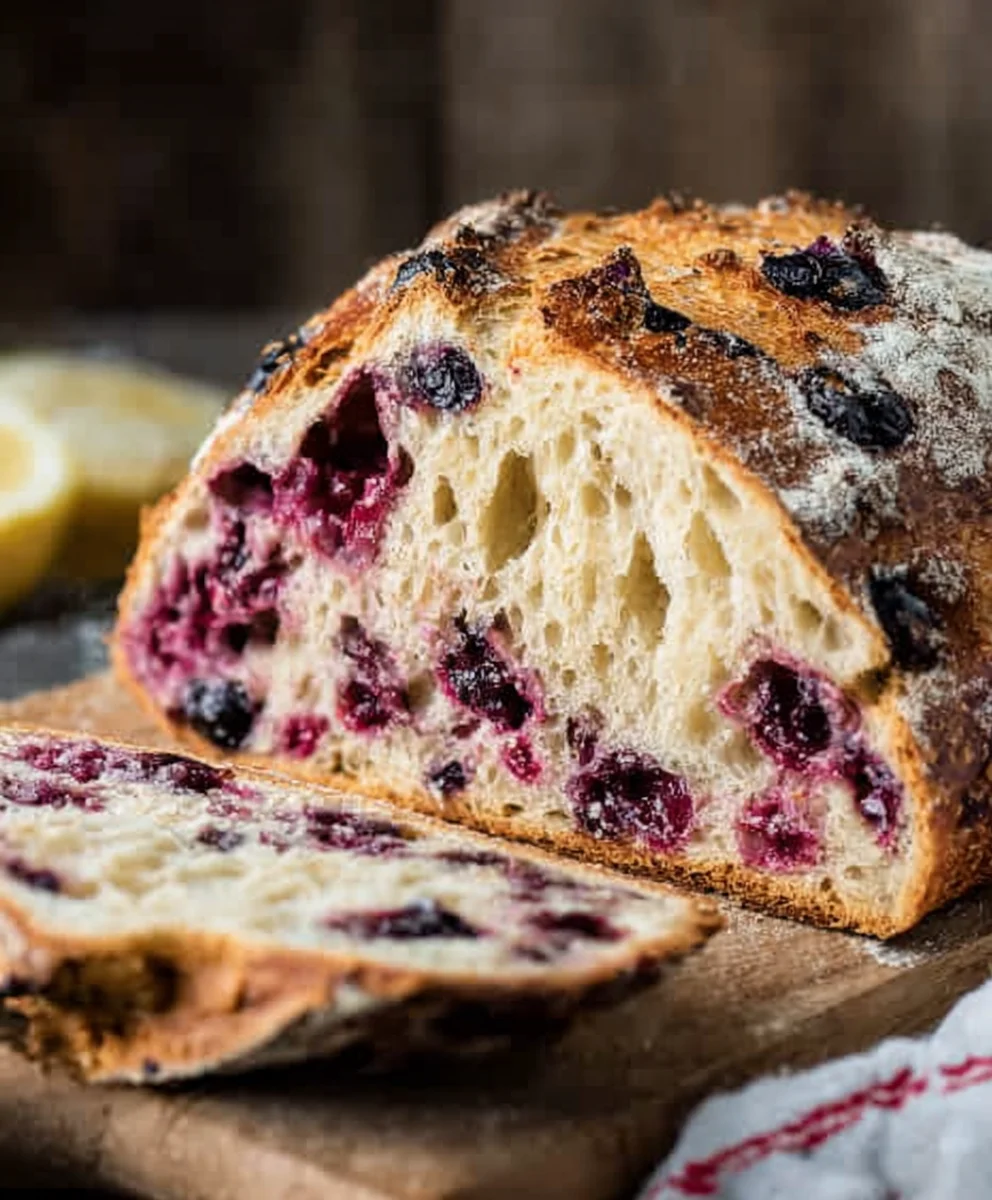
There you have it – your guide to creating the most delightful Lemon Blueberry Sourdough Bread Recipe! We’ve walked through each step, from nurturing your starter to achieving that perfect golden crust. This bread is a true celebration of simple, wholesome ingredients coming together in delicious harmony. The bright zest of lemon perfectly complements the sweet burst of blueberries, all enhanced by the wonderfully tangy depth of sourdough. I truly hope you enjoy making and sharing this loaf as much as I do.
For serving suggestions, this Lemon Blueberry Sourdough Bread Recipe is fantastic toasted with a smear of butter, or even better with a dollop of Greek yogurt or cream cheese. It also makes a lovely base for avocado toast with a sprinkle of sea salt. If you’re feeling adventurous with variations, consider adding a hint of lavender for a floral note, or swapping some of the blueberries for raspberries. Don’t be afraid to experiment and make it your own!
Frequently Asked Questions:
Q: My sourdough starter isn’t very active. Can I still make this Lemon Blueberry Sourdough Bread Recipe?
A: While an active starter is ideal for optimal rise and flavor, you can still proceed with a less active starter. You might find the rise is a bit slower, and the tangy flavor may be less pronounced. Ensure your starter is fed and has shown some activity (bubbles and growth) before you begin extract. If it’s very sluggish, consider feeding it a couple of times a day for a few days prior to baking.
Q: Can I use frozen blueberries in this Lemon Blueberry Sourdough Bread Recipe?
A: Absolutely! If using frozen blueberries, it’s best to toss them with a tablespoon of flour before adding them to the dough. This helps prevent them from bleeding too much color into the dough and also keeps them from sinking to the bottom during baking. You don’t need to thaw them first.
Lemon Blueberry Sourdough Bread-Easy & Delicious
An easy and delicious recipe for homemade Lemon Blueberry Sourdough Bread, featuring a tender crumb and a flavorful glaze.
Ingredients
-
50g active sourdough starter
-
350g water
-
500g bread flour
-
11g salt
-
150g fresh blueberries
-
zest of one lemon
-
8 Tablespoons butter, room temperature (113g)
-
1/2 cup fresh blueberries, mashed (75g)
-
2 Tablespoons honey (45g)
-
a pinch of salt
Instructions
-
Step 1
Autolyse: Combine 500g bread flour and 350g water in a large bowl until just combined. Cover and let rest for 30-60 minutes. Then, add 50g active sourdough starter and mix until evenly distributed. -
Step 2
Add 11g salt. Perform stretch and folds every 20-30 minutes for 1.5-2 hours, until the dough is smooth and elastic. -
Step 3
Gently incorporate the zest of one lemon and 150g fresh blueberries using 4-6 stretch and folds. Let rest for 30 minutes. -
Step 4
Bulk Fermentation: Let dough rise at room temperature for 4-6 hours, or until increased by 50-75%. Shape the dough into your desired loaf and place seam-side up in a floured proofing basket. Refrigerate overnight (12-18 hours) for cold proofing. -
Step 5
Baking: Preheat oven to 475°F (245°C) with a Dutch oven inside for at least 30 minutes. Score the dough, then carefully place into the hot Dutch oven. Bake covered for 20 minutes. Remove lid, reduce oven temperature to 450°F (230°C), and bake for another 20-25 minutes until golden brown and internal temperature reaches at least 200°F (93°C). -
Step 6
Glaze: While bread bakes, mix 8 tbsp room temperature butter, 1/2 cup mashed blueberries, 2 tbsp honey, and a pinch of salt until smooth. Brush generously over the warm bread as soon as it comes out of the Dutch oven. Cool completely on a wire rack before slicing.
Important Information
Nutrition Facts (Per Serving)
It is important to consider this information as approximate and not to use it as definitive health advice.
Allergy Information
Please check ingredients for potential allergens and consult a health professional if in doubt.